Portable nasometry system
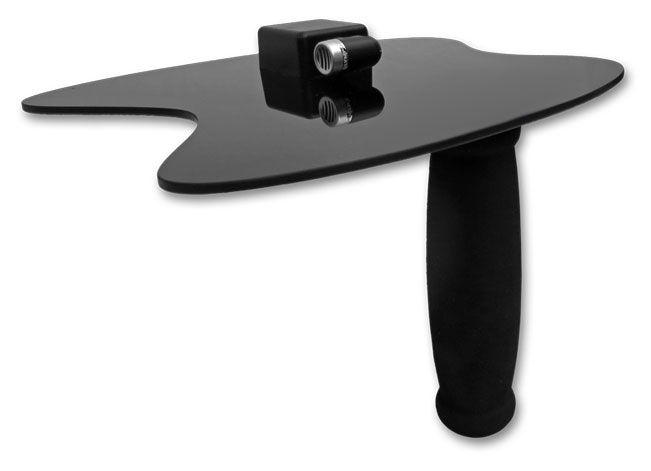
The Nasality Microphone is a portable, USB-powered nasometry system that measures nasalance — defined as the percentage of the total acoustic energy that is nasal during speech. It uses a lightweight acoustic separator that is positioned above the upper lip and fitted with independent, highly directional, nasal and oral microphones. The Nasality Microphone is trusted by speech and language professionals and researchers in over 35 countries.
The nasalance equation

Nasalance relates to the perceived nasality of speech and is calculated for voiced sounds only. It can be viewed in real-time for visual feedback, or recorded for off-line analysis.
Who uses the Nasality Microphone
The Nasality Microphone is used by speech and language professionals and researchers in hospitals, university programmes, and cleft palate services worldwide to obtain objective nasalance measurements across a wide range of speakers and populations.
Why speech professionals choose the Nasality Microphone
- ✓ Portable & lightweight — handheld design with carry case, practical for home visits, fieldwork, and educational settings where a laboratory system is not feasible.
- ✓ Adjustable fit — the acoustic separator incorporates large and small facial contours. Simply rotate the nasal and oral microphones to the side that best fits the contours of the face to ensure a good acoustic seal across a wide range of speakers.
- ✓ No calibration required — unlike some laboratory nasometry systems, the Nasality Microphone requires no calibration. The nasal and oral microphones are individually matched during manufacturing, so the device is always ready to use.
- ✓ Low cost — significantly more affordable than large laboratory nasometry systems, making objective nasalance measurement accessible to smaller services and university programmes.
- ✓ Three software options — works with NasalanceViewer, NasalanceViewer 3D, and icSpeech Professional Edition, offering real-time displays, biofeedback games, and offline analysis.
- ✓ Published studies — the Nasality Microphone has been used in peer-reviewed research across multiple populations, including hypernasality and cleft palate, and as a comparator instrument when validating novel nasometry systems. View publications
- ✓ Sold in over 35 countries — trusted by universities, hospitals, and research institutions worldwide, built on nearly 40 years of speech technology development.

























- Great Ormond Street Hospital
- Birmingham Children's Hospital
- Oxford University Hospitals
- The Welsh Centre for Cleft Lip and Palate
- The Newcastle upon Tyne Hospitals
- Salisbury NHS Trust
- Great Western Hospital
- Copenhagen Cleft Palate Centre
- Sharing Smiles
- Smile House Fondazione
- Nicklaus Children's Hospital
- Penn Medicine
- St James's Hospital Dublin
- Covenant HealthCare
- The Icelandic Speech and Hearing Institute
- Statped
- Aarhus University
- University of York
- Washington State University
- City, University of London
- Université Sorbonne Nouvelle
- Laboratoire de Phonétique et Phonologie
- Universidad de Valencia
- Catholic University of Valencia
- Cyprus University of Technology
- University Health Network
- Orient Speech Therapy
- Fundacja Rozszczepowe Marzenia
Software options
NasalanceViewer
NasalanceViewer is Windows software designed for dedicated nasalance measurement and visual feedback. It is well suited to clinical settings and as an introduction to instrumental nasometry.
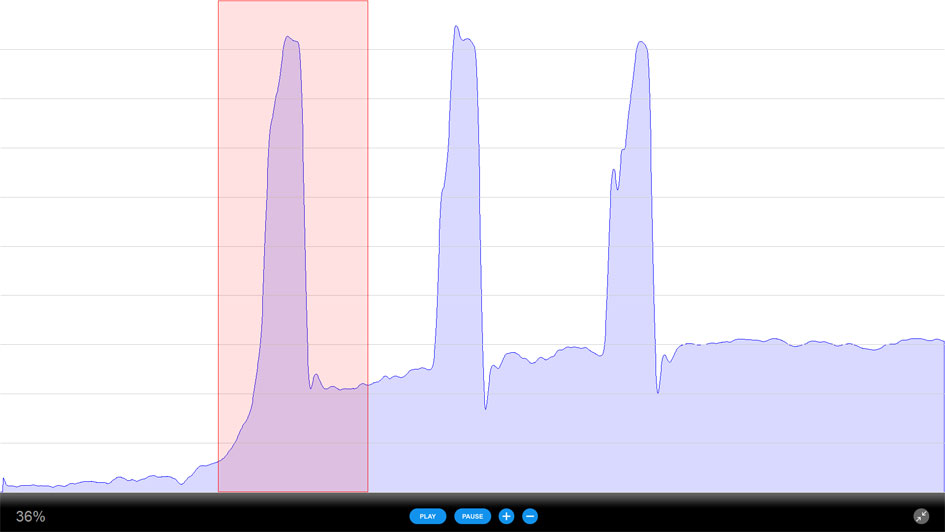
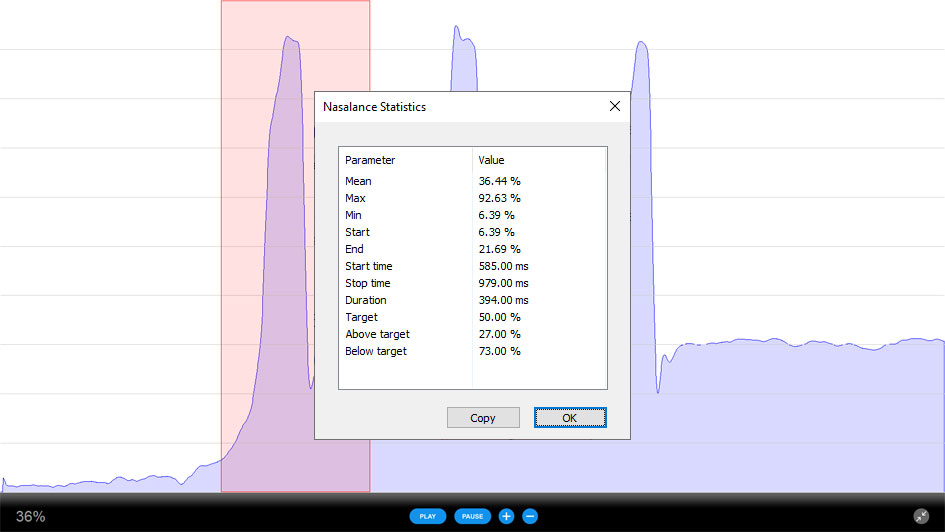
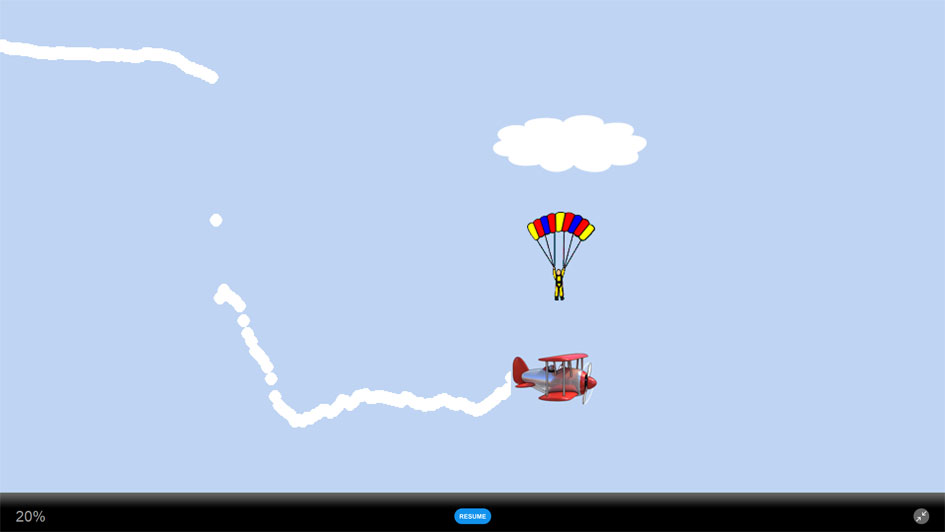
- Real-time visual feedback of nasalance
- Off-line objective analysis of nasalance
- Auditory playback of speech production
- Waveform display with adjustable target cursor
- Skywriter biofeedback game with adjustable target
- Simple user interface — minimal training required
- Windows 10 and 11 compatible
NasalanceViewer 3D
In addition to providing numerical displays of nasalance and nasal-oral speech, NasalanceViewer 3D uses computer animation and 3D modelling techniques to approximate velopharyngeal closure and nasal-oral airflow.
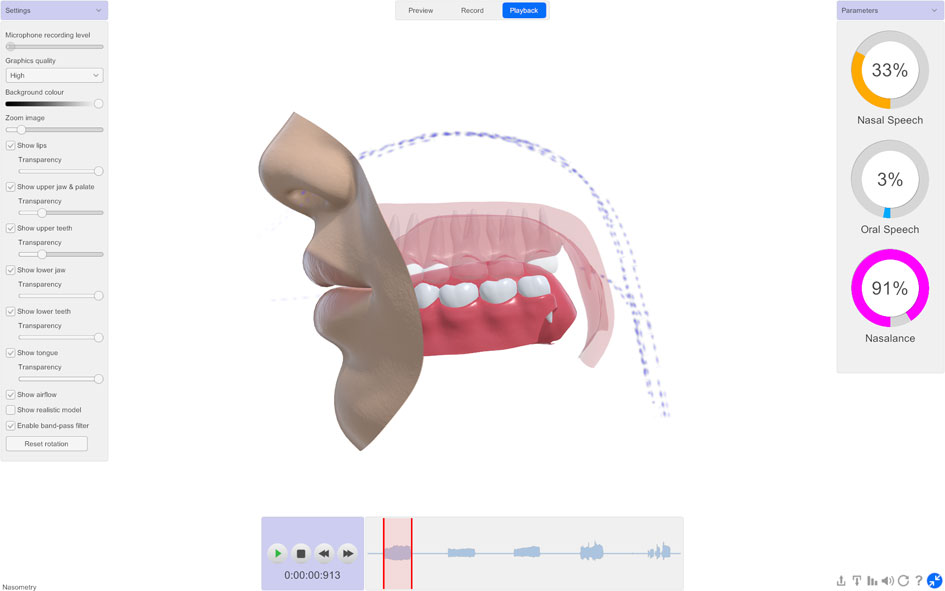
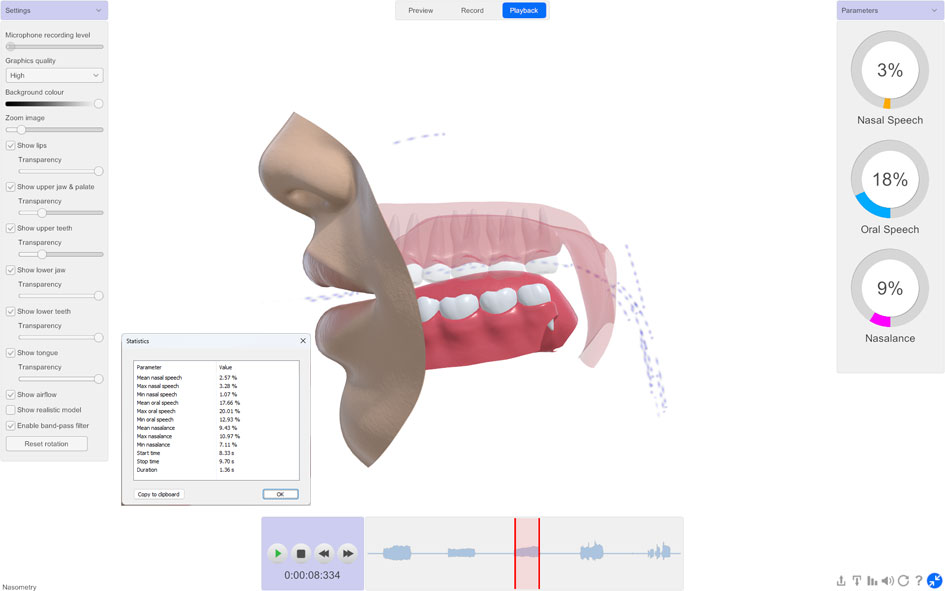
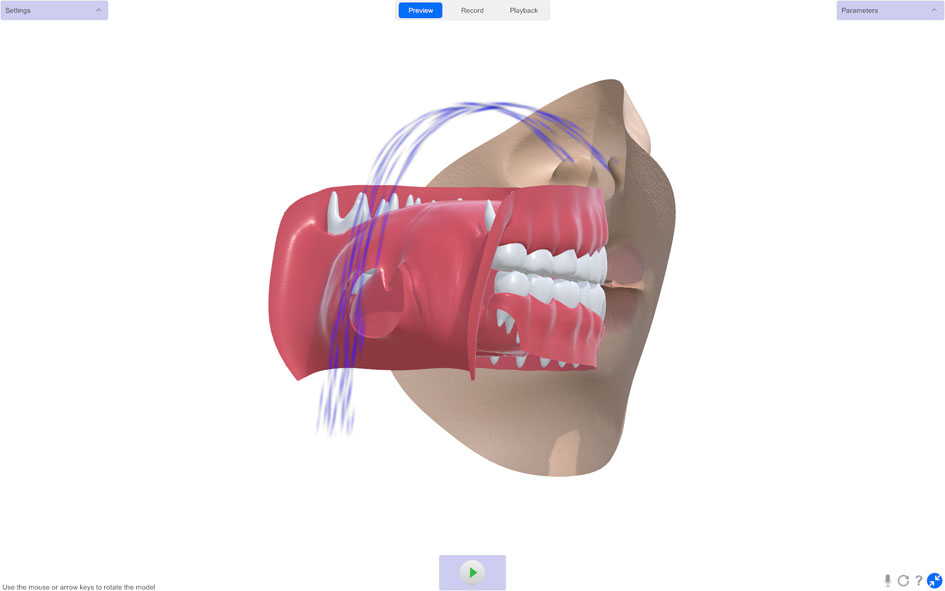
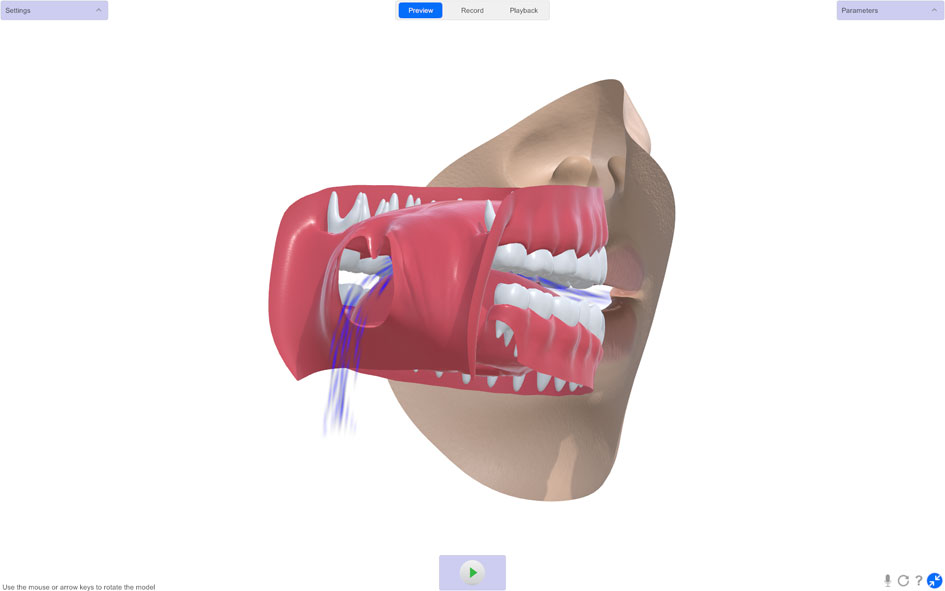
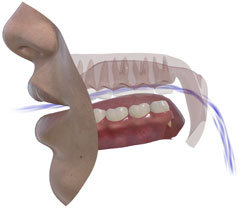
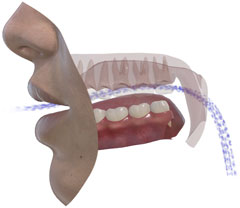
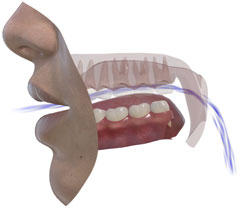
The animated 3D model consists of the lips, teeth, tongue, lower jaw, hard palate, soft palate and uvula. The transparency of these articulators can be adjusted to reveal hidden structures, and the model can be rotated 360°. Airflow clearly illustrates the difference between nasal, oral, voiced and voiceless sounds.
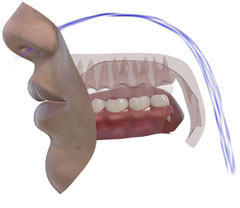
Nasal airflow (soft palate lowered)
Oral airflow (soft palate raised)
Voiced airflow (intermittent flow)
Voiceless airflow (continuous flow)
- Real-time 3D animated model of velopharyngeal closure and nasal-oral airflow
- Photorealistic and stylised views with adjustable articulator transparency
- 360° model rotation
- Real-time and off-line nasalance displays and analysis
- Auditory playback of speech production
- File format compatible with icSpeech Professional Edition
- Windows 10 64-bit and 11 64-bit compatible
icSpeech Professional Edition
icSpeech Professional Edition is a comprehensive speech visualisation and analysis package that significantly extends the capability of the Nasality Microphone. It provides a wider range of nasalance displays including separate nasal and oral speech waveforms, dynamic bar charts and spectrograms. The data recorder supports picture and word prompting, and six interactive biofeedback games make it engaging for younger speakers. Extensive analysis and export features support both clinical practice and research. It also supports multiparameter recording, allowing nasalance data to be combined with electropalatography (EPG), electroglottography (EGG), airflow and video.
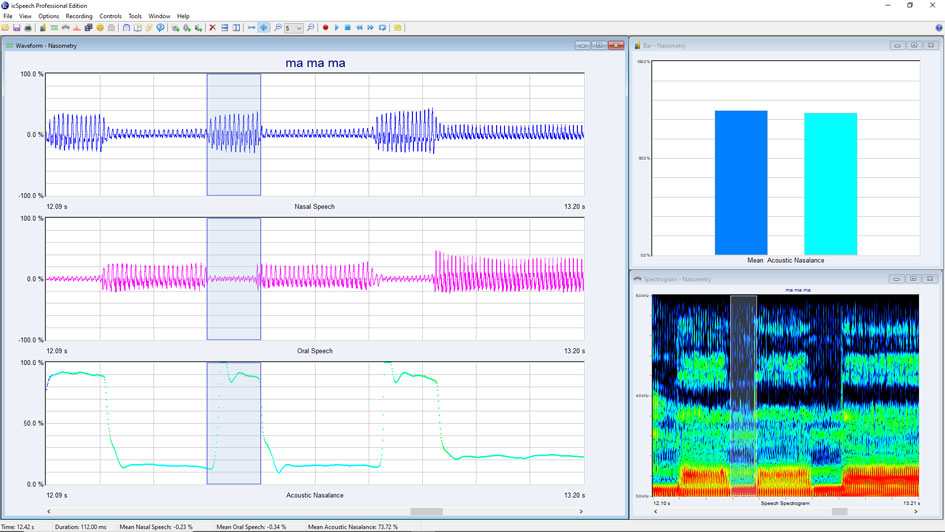
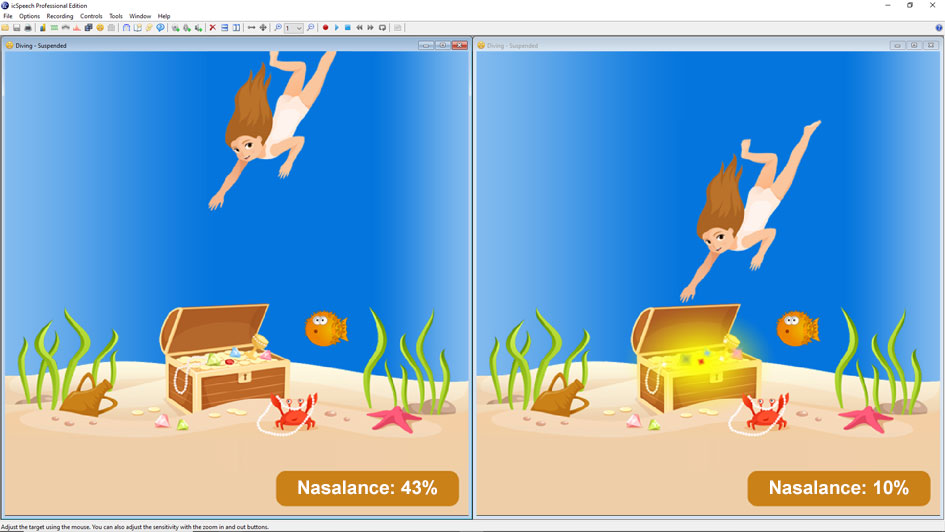
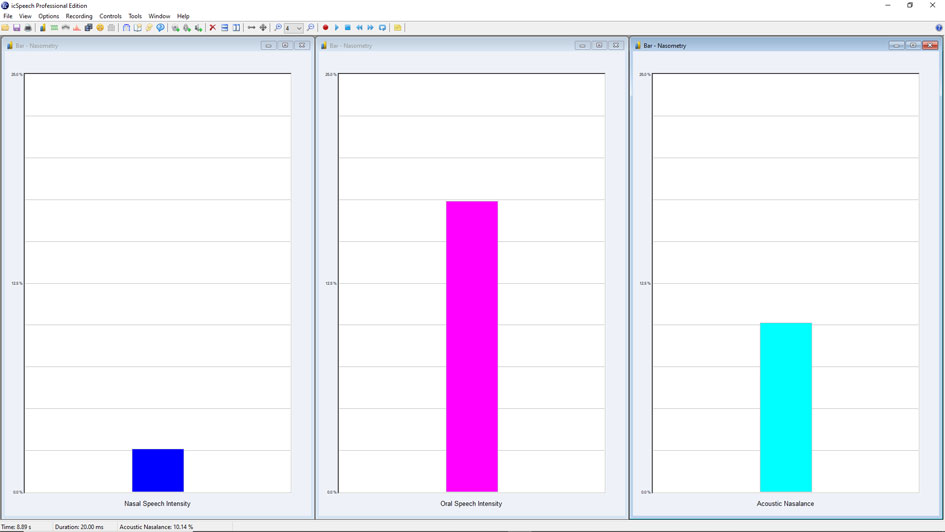
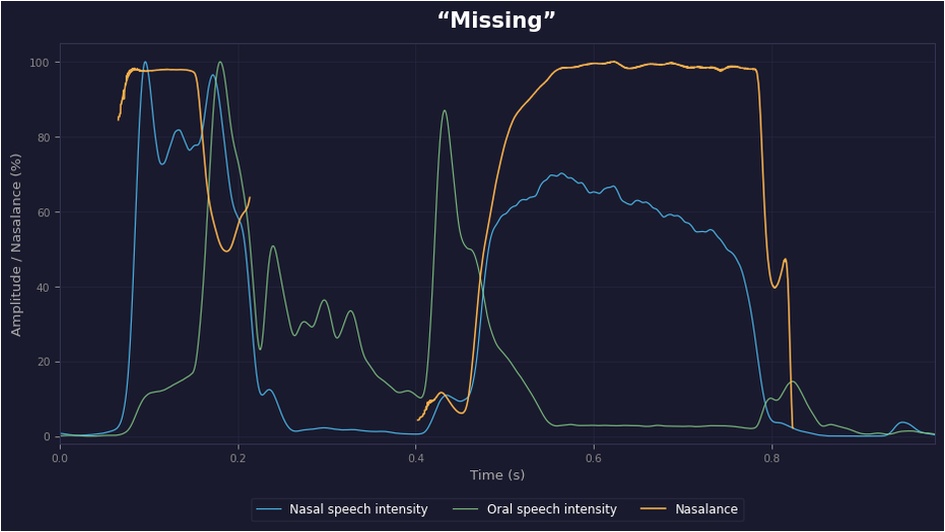
- Nasalance displays including nasal and oral speech waveforms, dynamic bar charts and spectrograms
- Data recorder with picture and text prompting
- Import or create custom text and picture prompts
- Six biofeedback games with adjustable targets and rewards
- Compare multiple recordings simultaneously
- Export raw data to CSV for external processing
- Attach user notes to recordings
- Pronunciation tools including Speech Intelligibility Scorer and Minimal Pairs Tutor
- Combines nasometry with electropalatography (EPG), electroglottography (EGG), airflow and video
- Windows 10 and 11 compatible
Software comparison table
| Feature | NasalanceViewer | NasalanceViewer 3D | icSpeech Professional Edition |
|---|---|---|---|
| Displays | |||
| Waveforms | |||
| Dynamic bar charts | |||
| Spectrograms | |||
| Spectrums | |||
| Video (webcam, ultrasound, etc.) | |||
| Multiparameter display (EPG, EGG, airflow) | |||
| Biofeedback games | 1 | 6 | |
| 3D animated velopharyngeal model | |||
| Analysis & recording | |||
| Data recorder | |||
| Synchronised auditory playback | |||
| Picture and text prompting | |||
| Import or create custom prompts | |||
| Offline analysis using cursors | |||
| Compare multiple recordings | |||
| Export analysis data to clipboard | |||
| Export raw data to CSV | |||
| Multiparameter recording (EPG, EGG, airflow, video) | |||
| Attach user notes to recordings | |||
The importance of acoustic separation in nasometry
For accurate nasalance measurement, a good seal between the face and the acoustic separator is essential. This prevents oral sounds being detected by the nasal microphone and vice versa. The acoustic separator incorporates large and small facial contours, and the nasal and oral microphones can be rotated to the side that best fits the contours of the face. The microphones are also highly directional, which further improves acoustic separation.
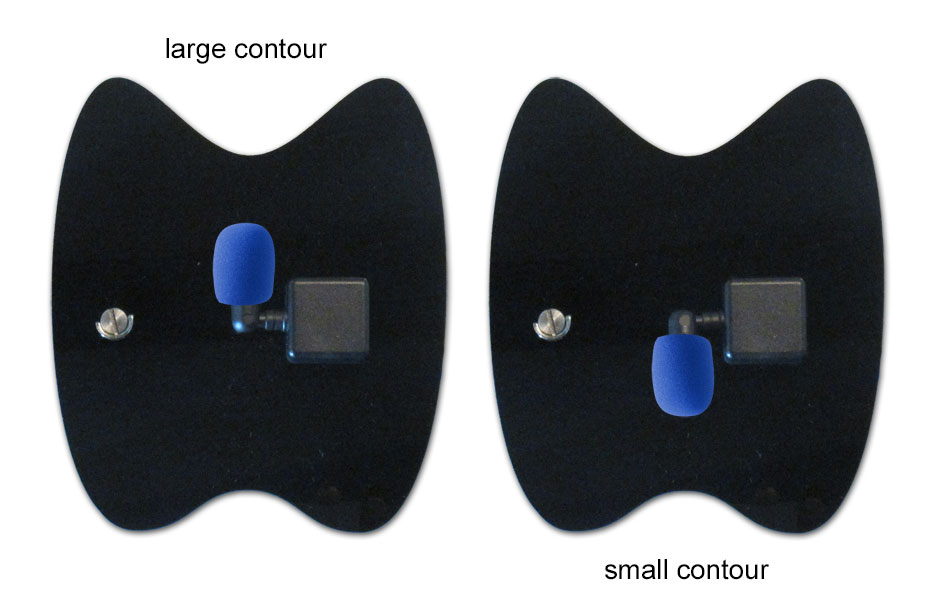
During the manufacturing process, both the sensitivity and frequency response of the nasal and oral microphones are individually matched, ensuring the accuracy of the nasalance calculation.
Video guides
This presentation introduces the Nasality Microphone and provides an overview of its key features, acoustic design, and compatible software options.
System specification
Microphones
| Parameter | Value |
|---|---|
| Left channel | Nasal speech |
| Right channel | Oral speech |
| Type | Electret condenser |
| Directionality | Uni-directional |
| Frequency response (band-pass filter disabled) | 100 - 15,000Hz |
| Frequency response (band-pass filter enabled) | 350 - 650Hz |
| Sensitivity | -40dB at 1kHz (0dB = 1V/Pa) |
| Output impedance | 2.2k ohm |
| Power supply | 1.5V - 10V |
USB audio adaptor
| Parameter | Value |
|---|---|
| Microphone input | 2 channel stereo |
| Sample rates | 48kHz, 44.1kHz, 16kHz and 8kHz |
| Resolution | 16bit |
| THD | -90dB |
| Frequency response | 20 - 20,000 Hz |
| Input range | 0 - 1.25 Vrms |
| Dynamic range | 96dB |
| Record gain range | -6 - 33dB |
| Supply voltage | 4.5 - 5.5 VDC via USB |
| Total power consumption | 33 mA |
System requirements
| Parameter | Value |
|---|---|
| Supported operating systems | Windows 10 and 11 |
| Supported computers | Desktop, laptop, tablet |
| Connectivity | USB 1.0, 2.0, 3.0 |
| Power | USB bus powered |
Package contents
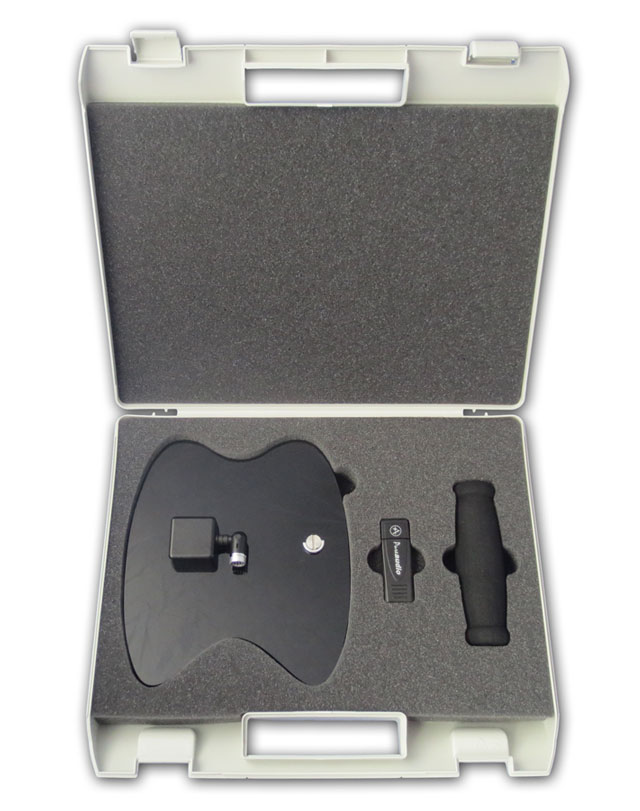
The Nasality Microphone is supplied as a complete hardware package. Choose from three software options to suit your requirements and budget.
- Nasality Microphone
- Carry case
- Four foam microphone windshields
(replacement windshields available to order) - User manual
- 12-month manufacturer's guarantee
- NasalanceViewer software (optional)
- NasalanceViewer 3D software (optional)
- icSpeech Professional Edition software (optional)
Frequently asked questions
- Handheld and portable — no head mounting required, unlike laboratory nasometry systems
- Significantly more affordable than the PENTAX Nasometer and comparable laboratory systems
- USB bus-powered — no mains connection needed
- No calibration required — unlike conventional nasometry systems
- Suitable for fieldwork and home visits where laboratory systems are impractical
- Validated in peer-reviewed research as an alternative to the PENTAX Nasometer
Nasality Microphone, icSpeech, a division of Rose Medical Solutions Ltd., Canterbury, UK.
A list of publications featuring icSpeech technology is available on our publications page.
- Normative data collection — establishing nasalance reference values for specific languages, age groups, and speaker populations
- Cross-linguistic research — comparing nasalance scores across languages and dialects to investigate the relationship between vowel composition and nasalance
- Clinical population studies — measuring nasalance in velopharyngeal, cleft palate, hypernasal, and hyponasal populations before and after intervention
- Instrument validation — used as a comparator instrument in peer-reviewed studies validating novel nasometry systems
- Biofeedback research — investigating the effectiveness of real-time visual nasalance feedback in speech therapy
- Paediatric research — measuring nasalance across different age groups in children, including reliability studies demonstrating high intra-session and inter-session consistency
- Motor speech research — measuring nasalance in speakers with neurological conditions affecting velopharyngeal function
Intended use: The Nasality Microphone is a general measurement instrument for use by speech and language professionals, researchers, and educators. It is not intended for use as a medical device for the diagnosis, prevention, monitoring, or treatment of disease.