English International Phonetic Alphabet (IPA)
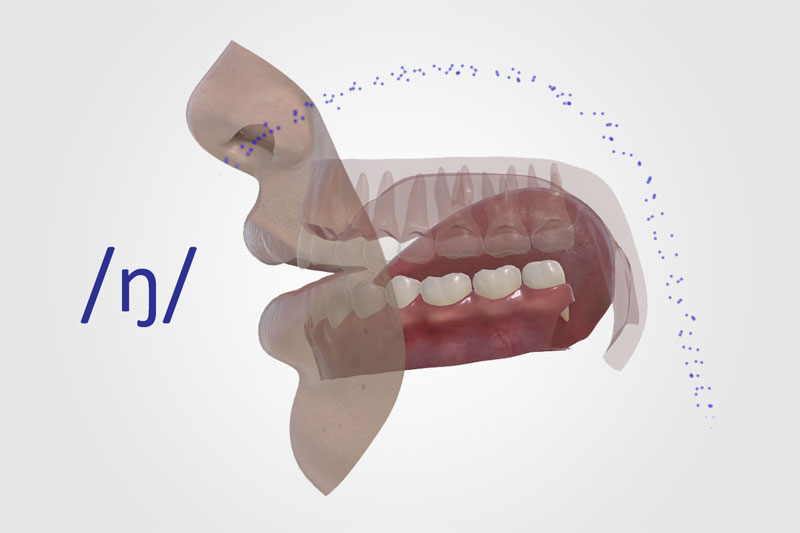
A phoneme is the smallest unit of sound in a language. The International Phonetic Alphabet (IPA) is a system of letters and symbols used to represent the individual sounds of speech. The table below lists the IPA symbols for American English, with a short 3D animation showing how each sound is produced — click any video link to watch.
| Phonetic symbol | Example | Phonetic spelling | Video |
|---|---|---|---|
| /i/ | beat | /b/ /i/ /t/ |  |
| /ɪ/ | bit | /b/ /ɪ/ /t/ | |
| /e/ | bait | /b/ /e/ /t/ | |
| /ɛ/ | bet | /b/ /ɛ/ /t/ | |
| /æ/ | bat | /b/ /æ/ /t/ | |
| /ʌ/ | but | /b/ /ʌ/ /t/ | |
| /ə/ | about | /ə/ /b/ /ɑʊ/ /t/ | |
| /ɚ/ | bird | /b/ /ɚ/ /d/ | |
| /u/ | boot | /b/ /u/ /t/ | |
| /ʊ/ | book | /b/ /ʊ/ /k/ | |
| /o/ | boat | /b/ /o/ /t/ | |
| /ɔ/ | bought | /b/ /ɔ/ /t/ | |
| /ɑ/ | bob | /b/ /ɑ/ /b/ | |
| /ɑɪ/ | bite | /b/ /ɑɪ/ /t/ | |
| /ɑʊ/ | brown | /b/ /r/ /ɑʊ/ /n/ | |
| /ɔɪ/ | boy | /b/ /ɔɪ/ | |
| /p/ | pot | /p/ /ɑ/ /t/ | |
| /b/ | big | /b/ /ɪ/ /g/ | |
| /d/ | dog | /d/ /ɔ/ /g/ | |
| /t/ | top | /t/ /ɑ/ /p/ | |
| /k/ | kit | /k/ /ɪ/ /t/ | |
| /g/ | got | /g/ /ɑ/ /t/ | |
| /f/ | fog | /f/ /ɔ/ /g/ | |
| /v/ | vat | /v/ /æ/ /t/ | |
| /θ/ | thick | /θ/ /ɪ/ /k/ | |
| /ð/ | that | /ð/ /æ/ /t/ | |
| /s/ | sat | /s/ /æ/ /t/ | |
| /z/ | zoo | /z/ /u/ | |
| /ʃ/ | shut | /ʃ/ /ʌ/ /t/ | |
| /ʒ/ | measure | /m/ /ɛ/ /ʒ/ /ɚ/ | |
| /h/ | help | /h/ /ɛ/ /l/ /p/ | |
| /ʧ/ | church | /ʧ/ /ɚ/ /ʧ/ | |
| /ʤ/ | jump | /ʤ/ /ʌ/ /m/ /p/ | |
| /m/ | mom | /m/ /ɑ/ /m/ | |
| /n/ | nod | /n/ /ɑ/ /d/ | |
| /ŋ/ | thing | /θ/ /ɪ/ /ŋ/ | |
| /l/ | lot | /l/ /ɑ/ /t/ | |
| /r/ | rat | /r/ /æ/ /t/ | |
| /w/ | won | /w/ /ʌ/ /n/ | |
| /j/ | you | /j/ /u/ | |
Go beyond the phonetic symbol chart
This chart shows the IPA symbols, but it cannot show how each sound is made or tell you whether you are producing it correctly. Pronunciation Coach 3D lets you type any English word or sentence and see how the tongue, lips and airflow shape each sound, then record yourself and get an instant pronunciation score.
Frequently asked questions
The International Phonetic Alphabet (IPA) is a system of symbols used to represent the individual sounds of speech. Each sound has its own symbol, and each symbol represents just one sound, regardless of how a word is spelled. This makes the IPA a reliable way to show pronunciation, and it is used by language learners, teachers, dictionaries and speech and language professionals worldwide.
A phoneme is the smallest unit of sound that can change the meaning of a word. For example, the words “pat” and “bat” differ by a single sound: /p/ in “pat” and /b/ in “bat”. That difference changes the meaning. Each phonetic symbol represents one of the individual sounds of American English.
American English is commonly described as having around 40 speech sounds, each represented by its own phonetic symbol: 16 vowel sounds, including diphthongs as in “bite”, “brown” and “boy”, and 24 consonant sounds. You may see the figure “44” quoted elsewhere; this is often used for British English, where several vowel sounds are analysed differently.
Letters belong to the written alphabet, while phonetic symbols represent spoken sounds. English has 26 letters but around 40 distinct speech sounds, so letters and sounds do not match one-to-one. The same letter can represent different sounds, as in the “a” in “cat” and “about”, and the same sound can be spelled in different ways, as in the /i/ sound in “beat”, “see” and “key”. Phonetic symbols remove this ambiguity by giving each sound its own symbol.
These phonetic symbols are for American English pronunciation. Many symbols are shared with British English, but some differ, especially the vowel sounds — including the way /r/ shapes vowels in words such as “bird”. British English often uses a slightly different set of symbols, which is why you may see different symbols elsewhere.
Each symbol in the table above links to a short 3D animation showing how that sound is produced. To go beyond the example videos, Pronunciation Coach 3D lets you type any English word or sentence, hear it spoken and watch an animated 3D model of the mouth showing how the tongue, lips and airflow shape each sound.
The best way to improve is to practise and compare. Pronunciation Coach 3D records your own speech and displays it as a waveform alongside the 3D model, so you can compare the two directly, examine individual speech sounds, and receive a speech intelligibility score that shows how clearly your speech was understood.